ภาษา
ภาษา






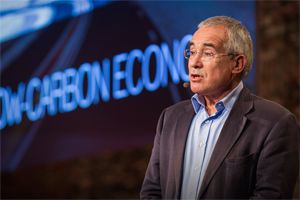
Stern เตือนเจตจำนงลดก๊าซเรือนกระจกน้อยเกินกว่าจะหยุดปัญหาโลกร้อนได้
ทีมนักวิจัยซึ่งนำโดย Nicholas Stern ซึ่งเป็นประธานสถาบันวิจัย Grantham Research Institute on Climate Change เผยแพร่เอกสารระบุว่า เจตจำนงลดการปล่อยก๊าซเรือนกระจกที่ส่งเสนอต่อสหประชาชาติ โดยประเทศใหญ่ๆ ก่อนการประชุมเจรจาด้านภูมิอากาศ ณ กรุงปารีส ไม่เพียงพอต่อการรักษาอุณหภูมิเฉลี่ยของพื้นผิวโลกไม่ให้เพิ่มสูงขึ้นเกิน 2 องศาเซลเซียส
ทั้งนี้ สหรัฐฯ คาดว่าจะลดการปล่อยก๊าซเรือนกระจกลงร้อยละ 26-28 ภายในปี ค.ศ. 2025 สหภาพยุโรปตกลงที่จะลดก๊าซเรือนกระจกลงร้อยละ 40 ภายในปี ค.ศ. 2030 เทียบกับระดับการปล่อยของปี ค.ศ. 1990 ขณะที่จีนให้คำมั่นที่จะปล่อยก๊าซเรือนกระจกสูงสุดภายในปี ค.ศ. 2030 และเริ่มลดลงหลังจากนั้น
อย่างไรก็ตาม เจตจำนงที่จะลดก๊าซเรือนกระจกของประเทศเหล่านี้ จะทำให้เกิดการปล่อยก๊าซเรือนกระจก 20.9-22.3 พันล้านตัน ในปี ค.ศ. 2030 ขณะที่คาดว่าประเทศอื่นๆ ทั่วโลกจะปล่อยก๊าซเรือนกระจกรวมกันเท่ากับ 35 พันล้านตัน ดังนั้นจะมีการปล่อยก๊าซเรือนกระจกรวมทั้งสิ้นราว 56 พันล้านตันเป็นอย่างต่ำ ซึ่งสูงเกินกว่าระดับที่ UNEP ระบุว่าจะคงอุณหภูมิเฉลี่ยของพื้นผิวโลกไม่ให้สูงขึ้นเกิน 2 องศาเซลเซียสไว้ได้ด้วยความน่าจะเป็นร้อยละ 50-66 อยู่ราว 12 พันล้านตัน
ทีมผู้วิจัยได้เสนอแนะว่าประเทศต่างๆ ควรมุ่งเน้นที่จะเพิ่มระดับการลดก๊าซเรือนกระจกทั้งก่อนและหลังการประชุมเจรจาปารีสด้วย 4 แนวทาง คือ
1) หาแนวทางที่จะลดก๊าซเรือนกระจกให้ได้เพิ่มมากขึ้นเพื่อเสนอเจตจำนงก่อนการประชุมเจรจาปารีส หรือดำเนินโครงการลดก๊าซเรือนกระจกร่วมกันระหว่างประเทศที่สนใจ
2) เพิ่มการลงทุนและสร้างนวัตกรรม โดยเฉพาะในด้านการพัฒนาเมือง ระบบพลังงาน และการใช้ที่ดิน
3) สร้างกลไกภายใต้ข้อตกลงปารีสในเดือนธันวาคม ค.ศ. 2015 เพื่อใช้สำหรับทบทวนผลการดำเนินงานของประเทศต่างๆ และหาแนวทางเพิ่มระดับการลดก๊าซเรือนกระจกของประเทศเหล่านั้นสำหรับปี ค.ศ. 2030 และหลังจากนั้น
4) สร้างกระบวนการภายในประเทศที่มีความเข้มแข็งและโปร่งใส เพื่อการดำเนินงานตามเจตจำนงลดก๊าซเรือนกระจกที่ได้ให้คำมั่นไว้ รวมทั้งใช้สำหรับการตัดสินใจยกระดับการลดก๊าซเรือนกระจก
อ้างอิงมาจากบทความ : Stern warning: Emissions pledges too weak to stop global warming
The pledges made by major international emitters ahead of the Paris UN conference are not strong enough to limit global warming to 2C, according to team of researchers led by Nicholas Stern.
The US is expected to offer emissions cuts of 26% to 28% by 2025 , the EU has agreed to cut its emissions by 40% by 2030, compared with 1990 levels, while China has promised its emissions will peak by 2030.
However, these proposed cuts put the trio on track to generate between 20.9 and 22.3 billion tonnes of carbon-dioxide-equivalent in 2030. Current and planned policies from the rest of the world suggest they will produce around 35 billion tonnes of CO2e, putting the global total at around 56bn tonnes CO2e
At best, this is 12bn tonnes more than the level UNEP says would give the planet a 50-66% chance of limiting global warming to less than 2°C.
“Countries should be considering opportunities to narrow this gap before and after the Paris summit,” said the paper overseen by Stern, who is chair of the Grantham Research Institute on Climate Change.
Action plan
The authors suggest that countries should focus on four key ways to increase the ambitions of emissions cuts both before and after the Paris summit.
1) Find credible ways of achieving bigger emissions reductions which can be included in pledges to be submitted before the Paris summit, or achieved through additional efforts by partnerships, for example, through specific decarbonisation initiatives among willing countries.
2) Intensify efforts to increase investment and innovation, particularly in relation to the development of cities, energy systems and land use, that could help to close the gap between intentions and the goal before and after 2030.
3) Create a mechanism, to be included in the agreement emerging from the Paris summit in December 2015, for countries to review their efforts and to find ways of ramping up the ambition of their emissions reductions by 2030 and beyond.
4) Build the strong and transparent domestic base necessary for the implementation of pledges, and so setting them on a path to decarbonisation and enabling them to ramp up their ambitions.
ที่มาของบทความและรูปภาพประกอบ : http://www.edie.net